

It opens in January, Jack... Guess I will go there, but I suppose they don?t allow any photograhy.
JJ
Mongol bow and quiver find in Tsagaan Khad
-
jack farrell
- Posts: 1864
- Joined: Sun Mar 13, 2005 3:40 am
- Location: Texas
-
jack farrell
- Posts: 1864
- Joined: Sun Mar 13, 2005 3:40 am
- Location: Texas
-
jack farrell
- Posts: 1864
- Joined: Sun Mar 13, 2005 3:40 am
- Location: Texas
Looks like of several hundred sites reported on in their entirety, one only is a rock cave burial with a damaged bow, quiver of arrows, saddle and tack, clothes and human remains.
This is probably the site of Arcat Del, reported by the author Ulambayar Erdenebat, in this, his dissertation. He studied at U Bonn. He also has a book out on the Mongol capitol, Karakorum, with others.
There are very good pictures in part 7. Because of the presence of arrow points and quiver fragments, it would appear that many other graves once held archery grave goods.
I notice that Shiluustei sum (Ss) site is not reported on while an earlier find, the Novgorod bow, is. Neither is the companion bow to the Ss bow. Please correct me if any of this is not so. My German is non existent.
Mr. Erdenebat is also a contributor to the book, Genghis Khan and the Mongol Empire, the book which accompanies the current exhibit in Dallas, Texas, USA; source for material on Ss bow, etc.
-
Uli

- Posts: 600
- Joined: Sat Aug 13, 2005 7:33 pm
- Location: Saxony (home), Baltic (now)
Jack, the search term is "Bogen" = bow in German. There are various sites with at least parts of bows, mostly bone plates. only one with good picutures.
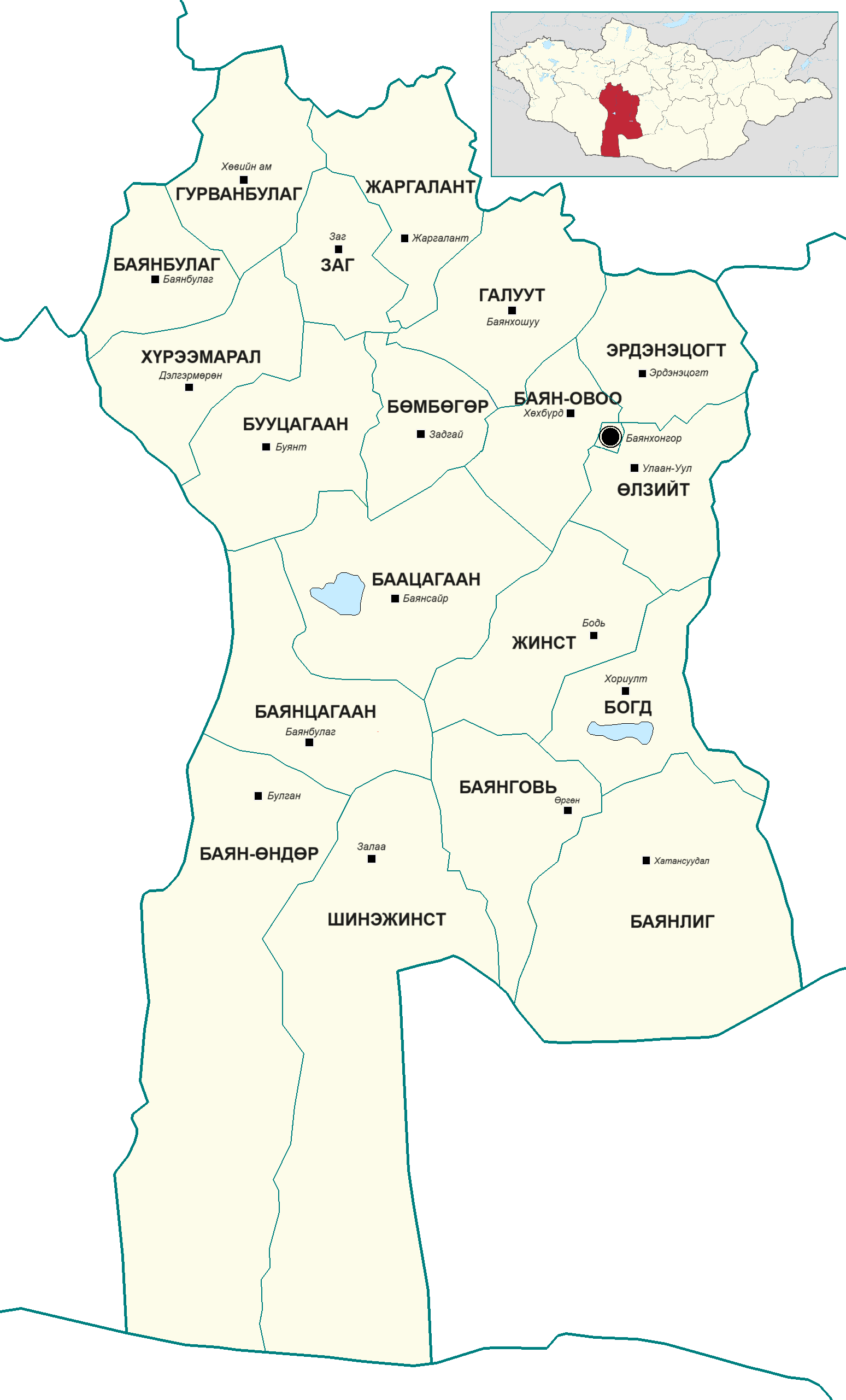
I cannot find Shiluustei Sum either, however my information from the museum is that the finding place of what we call Shiluustei Sum bow was Bumbugur (Бөмбөгөр) Sum in Bayankhongor province - not reported either, will be back if I can clarify this.
(http://upload.wikimedia.org/wikipedia/c ... um_map.png)
-
jack farrell
- Posts: 1864
- Joined: Sun Mar 13, 2005 3:40 am
- Location: Texas
Uli; thanks for the tip. Actually I have reported already on the Ss bow including the best available description of the joinery but some info on the site might be good.
The Arcat Del bow now has good photos but maybe not good enough to describe the joinery. However, the text is most informative but a machine translation makes little of it. For instance bablefish is unable to unwind birkenrindkocher into birch bark quiver.
If I knew German I would translate parts 2 and 3 on pages 308 and 309; part 7, the info on the bow and arrows, and post here on this discussion. A description of how wolf hunters found the site and the artifacts were recovered by the museum, page 307, would be really nice for us English speakers. I know some industrious German speaker will provide this for us. With the color photos in the article, much might be made from it. Thanks Uli.
-
Amarutu
- Posts: 105
- Joined: Tue Jun 22, 2010 9:02 am
- Location: Germany
- Contact:
-
Uli
- Posts: 600
- Joined: Sat Aug 13, 2005 7:33 pm
- Location: Saxony (home), Baltic (now)
Good idea Jack. I ll translate the sections you mention. If somebody needs other sections: copy-paste the german text and post here. 
PS: Бөмбөгөр is written "B?mb?g?r" in German
there are two sites there, one is Arcat Del
quiver and arrows look similar to those displayed with the Ss. bows
but not identical or ?
PS: Бөмбөгөр is written "B?mb?g?r" in German
there are two sites there, one is Arcat Del
quiver and arrows look similar to those displayed with the Ss. bows
but not identical or ?
-
Uli
- Posts: 600
- Joined: Sat Aug 13, 2005 7:33 pm
- Location: Saxony (home), Baltic (now)
PS: Shiluustei (Шилүүстэй) is written Shil??stei and located in Zavkhan province - no finds reported here.
http://en.wikipedia.org/wiki/Zavkhan_Province
Шилүүс (Shiluus) = Lynx
http://mn.wikipedia.org/wiki/%D0%A8%D0% ... 2%AF%D1%81
http://en.wikipedia.org/wiki/Zavkhan_Province
Шилүүс (Shiluus) = Lynx
http://mn.wikipedia.org/wiki/%D0%A8%D0% ... 2%AF%D1%81
-
Amarutu
- Posts: 105
- Joined: Tue Jun 22, 2010 9:02 am
- Location: Germany
- Contact:
Well - me and my dictionary are ready. I really hope it is readable and useful! Enjoy!
In June 1999 two local hunters chasing a wounded wolf near the peak of the mountain ?Arcat Del? in the sourthwestern part of the Changaj Mountains (are mor precise infos about the location necessary?) spotted a piece of wood, hanging out of a cervice through their binoculars. They climbed ca. 8-10m upwards and found a niche with a board-coffin tied together wirh a string. They opened the coffin on the headside wit a sharp knive and dug in the headpart of the coffin and took out a wooden saddle and its iron strap fittings lying below the head of the deceased.
Luckily one of the finders was in the end of november 1999 in the capital Ulaanbaatar and introduced the former director of the Mongolian Historical Museum Dr. Id?innorov. He also brought the robbed saddle-tree and rests of the fittings to the museum. The rock cervice funeral one of Mountain ?Arcat Del? was salvaged in August 2001 by the research team of the ?Mongolisch Deutsche Karakorum Expedition? (Mongolian-German Karakorum Expedition).
The Funeral was on the Southside of the peak of the mountain ( ~2686m over sea-level), in a niche, 1-1,4m high wich was oriented with its longitudinal axis to northwest-southeast. The niche can only be discovered from the south-east side, because the opposite entrance side is pretty steep/slopy. The floor/ground of the niche, which is 4,5m long and 0,9m wide, consists of two big boulders.
A board-coffin for a stretched funeral and woodbeams were oriented in the longitudinal axis of the niche. The woodbeams were placed on the lenght sides of the coffin. Everything was covered with dust, mice-poo and excements. The beams of the mule (or some animal to carry, wordly translation is ?beast of burden? instead of mule) were oriented in the same way along the longitudinal axis. Both entrances of the niche had usnorted rocks as protection or cover.
The funeral was started from the headboard, were Hunters started to dig out by curiosity. Here were found - as mentioned, a saddle with fittings for a strap, a iron stirrups and a bowl (wordly tralslated: receptacle) made of birchbark. The headplate of the coffin is big and broad. Its tongued beams were fitted compactly and tied together with a slim rope. The covering plate of the coffin was half destroyed. Never the less, all woodbeams close to the boulder were collected and heaped together by helpers. On the covering plate can be seen another smaller ?roundcornery? covering plate tied to the covering plate with strings. This is the first find of this kind in our research. Along the northern wall, in the headpart of the coffin, were two broken beams. Along the western wall was a broken board of the covering plate and six splitted pieces of wood. Along the eastern wall were three broken boards, two broken splitted pieces of wood, two wooden boards, six woodbeams, leather and woodfragments on the left side of the coffin, sometimes below the beams.
In the beginning of the scientific exposure, we brought the unsorted stones and woodbeams out of the niche. In the boardcoffin was a skeleton, whos head and chest were visible. The Skeleton of a human being, whos anthropological type surely was mangoloide, must be a ca. 50 jears old man. Its in common in the anatomical order, lay in stretch dorsal position (lying on the back) mit the head to northwest. His view was upwards. Instead of his left lower lag was a left arm with a hand. The left lower leg was on the right-hand hip which lay across on the right-hand upper leg. The right-hand Arm lay on the right-hand hip.
Inventory
A: Armory
1. Saber: slightly up bendet, towards the tip two-bladed with undecorated, boaty shaped handguard, downwards little bendy grip, covered with wood and leather and fixed with an iron stud. Twoscaled wood sheath, covered with leather, two clamps directly below the handguard and in the middle of the saber. Total leght 90,3cm, wood sheath 78,6cm, grip 11,0cm, handguard 8,1cm x 1,0cm 1,2cm deep. Clamps made of iron-ribbon with roud end-pieces on leather, stud with an eyelet having a movable ironring inside where the lower clamp of the rack holds. Clap-length is 5,5cm (top) and 4,8cm (bottom). Diameter of the ironring is 1,8cm (top) and 1,6cm (bottom). The preserved leatherband is 5,9cm long and 0,9cm wide. It was located below the righthand leg, the grip below the hip, the tip below the right-hand lower leg.
2. Bow: Unstrung reflexbow with five curves, made of maximum three layers of bandshaped wood wich are rectangular twisted at the ends. Reenforcement in the middle of the grip. Middlelayer nearly rectangular cross section, sidereenforcemence slightly curved outside. The wooden layers are as far as one can see connected with a fibre wrapping. The complete bow is covered in tree bark. The final outside layer is birchbark, and only partly archived. The part of the bow found in the northern part of the grave was partly destroyed. Multiple parts of the bow like the strenghtened endpieces (approx. siyahs) with the nocks for the bowstring wre found in the deranged head and shoulder region on the right-hand side of the body.
Preserved lenght: 103cm
Total lenght (approx.): 135-140cm
inner wodden layer: 2,6 x 0,6cm
outer layer 2,0 x 0,4cm
length of the siyahs: southern end: 9,6cm, northern end: 11,0cm
Location: parralel tot the right-hand coffinwall, partly below the quiver, northern side partly derranged.
3. Quiver and arrows: Quiver made of Birchbark with wooden reenforcements. Four woodstrips with birchbark on the inside form the tubular quiver becoming wider towards the bottom. The upper part is slightly tub-shaped and open to put arrows in and out. Three birchbarkpieces form the corpus of the quiver, a big one at the bottom, a smaller one in the middle and a third wich is sewed only to the wooden reenforcements. On the left-hand side are two hangers made of woody with slit-shaped break-ins for the straps. Pieces of wood and birchbark are connected with leatherstraps.
Total lenght: 90cm
Front covering: 71,5cm
Diameter in the middle: 8,7cm
Diameter on the bottom: 14,7cm
Bottom hanger: 15,7cm
The quiver contains 19 arrows with different arrowheads made of iron. Five arrows reach above the top end of the quiver. Other Arrowparts were found in the derranged part of the head head and on the right-hand side of the torso.
Location: parralel to the right-hand coffinwall, directly above the right-hand leg. Bottom end at the footwall of the coffin. The arrows reach up tot the right upper arm. Upper area partly deranged.
added the more freely translated introduction wished by jack farrel. if you guys think i should add more information about the location of the spot and the one instructing dr. id?innorov - feel free to ask!
Last edited by Amarutu on Thu Sep 08, 2011 8:17 pm, edited 1 time in total.

-
Amarutu
- Posts: 105
- Joined: Tue Jun 22, 2010 9:02 am
- Location: Germany
- Contact:
-
Uli
- Posts: 600
- Joined: Sat Aug 13, 2005 7:33 pm
- Location: Saxony (home), Baltic (now)
good job Amarutu !
may I add: C14 date estimate: 1046 ? 38
Dusan, the "reinforcements" of grip and tips are likely bone, though this is not described specifically as bone.
but compare another picture in the catalogue showing a bone handle reinfocement (p.88 ) and compare to the Arcat Del bow picture p.318 - similarity 99%
(there are also bone tips on p.378)
-
Amarutu
- Posts: 105
- Joined: Tue Jun 22, 2010 9:02 am
- Location: Germany
- Contact:

-
jack farrell
- Posts: 1864
- Joined: Sun Mar 13, 2005 3:40 am
- Location: Texas
Amarutu; Good job and so quick. Have always admired German detail work.
Here is my editing. Am open to discussion about this. I assumed that the burial beams were used to carry the coffin into place and left there. There is still confusion in my mind between Erdenebat's use of words "beam" and "board."
You can cut and paste my version if you want and I will delete mine. Well done.
Well - me and my dictionary are ready. I really hope it is readable and useful! Enjoy!
In June 1999 two local hunters chasing a wounded wolf near the peak of the mountain Arcat Del in the southwestern part of the Changaj Mountains spotted a piece of wood through their binoculars, hanging out of a crevice. They climbed ca. 8-10m upwards and found a niche with a board-coffin tied together with a string. They opened the coffin at the head end with a sharp knife and dug in the head part of the coffin and took out a wooden saddle and its iron strap fittings lying below the head of the deceased.
Luckily, one of the hunters was in the capital, Ulaanbaatar, at the end of November 1999 and met with the former director of the Mongolian Historical Museum, Dr. Id?innorov. He also brought the saddle-tree from the grave and the rest of the fittings to the museum. The rock crevice burial of Mount Arcat Del was salvaged in August 2001 by the research team of the Mongolian-German Karakorum Expedition.
Rock crevice burial 1 (Catalogue Number 206)
The burial chamber was on the South side of the peak of the mountain ( ~2686m above sea-level), in a niche, 1-1,4m high which was oriented with its longitudinal axis to northwest-southeast. The niche can only be entered from the south-east side, because the opposite entrance side is very steep. The floor of the niche, which is 4,5m long and 0,9m wide, consists of two big boulders.
A board-coffin (?for a reclining interment?) and wood beams were oriented in the longitudinal axis of the niche. The wood beams were placed on the long sides of the coffin. Everything was covered with dust and mouse excrement. The beams of the ?beast of burden? were oriented in the same way along the longitudinal axis.(possibly the coffin was carried to the place of interment on poles. Ed.) Both entrances of the niche had rubble as protection or cover.
The Hunters began tearing at the head end of the coffin. Here was found - as mentioned, a saddle tree (saddle frame) with fittings for a strap, iron stirrups and a bowl (?receptacle?) made of birch bark. The headboard of the coffin is big and broad. Its tennoned beams were fitted compactly and tied together with a slim rope. The cover board of the coffin was half destroyed. Never the less, all wood beams close to the boulder were collected and heaped together by helpers. On the covering plate can be seen another smaller covering plate with rounded corners tied to the main cover plate with strings. This is the first find of this kind in our research. Along the northern wall, toward the headboard of the coffin, were two broken beams. Along the western wall was a broken board of the covering plate and six split pieces of wood. Along the eastern wall were three broken boards, two broken split pieces of wood, two wooden boards, six wood beams, leather and wood fragments on the left side of the coffin, sometimes below the beams.
In the beginning of the scientific work, we brought the stone rubble and wood beams out of the niche. In the board coffin was a skeleton, whose head and chest were visible. The human skeleton, whose anthropological type surely was of Mongolian type, must be that of a 50 year old man. In common in the anatomical type, he was laid stretched out in a dorsal position (lying on the back) with the head to northwest. His view was upwards. In the place of his left lower leg was a left arm and hand. The left lower leg was on the right hip which lay across the right upper leg. The right arm lay on the right hip.
Inventory
A: Armory
1. Saber:Two edged, slightly upward bending towards the tip with undecorated, boat shaped hand guard, slightly downwards bent grip, covered with wood and leather and fixed with an iron rivet. Two scaled wood sheath, covered with leather, two clamps directly below the hand guard and in the middle of the saber. Total length 90,3cm, wood sheath 78,6cm, grip 11,0cm, hand guard 8,1cm x 1,0cm 1,2cm deep. Clamps made of iron-ribbon with round end-pieces of leather, rivet with an eyelet having a movable iron ring inside where the lower clamp of the rack holds. Clap-length is 5,5cm (top) and 4,8cm (bottom). Diameter of the iron ring is 1,8cm (top) and 1,6cm (bottom). The preserved leather band is 5,9cm long and 0,9cm wide. It was located below the right leg, the grip below the hip, the tip below the right lower leg.
2. Bow: Unstrung reflex bow with five curves, made of maximum three layers of band shaped wood which are rectangular, twisted at the ends. Reenforcement in the middle of the grip. Middle layer nearly rectangular cross section, side reenforcement slightly curved outside. The wooden layers are as far as one can see connected with a fiber wrapping. The complete bow is covered in tree bark. The final outside layer is birch bark, and only partly preserved. The part of the bow found in the northern part of the grave was partly destroyed. Multiple parts of the bow, like the strengthened end-pieces (possibly nock pieces, Ed.) with the nocks for the bowstring were found in the disturbed head and shoulder region on the right-hand side of the body.
Preserved length: 103cm
Total length (approx.): 135-140cm
inner wooden layer: 2,6 x 0,6cm
outer layer 2,0 x 0,4cm
length of the siyahs: southern end: 9,6cm, northern end: 11,0cm
Location: parallel to the right-hand coffin board, partly below the quiver, northern side partly detached.
3. Quiver and arrows: Quiver made of Birch bark with wooden reinforcements. Four wood strips with birch bark on the inside form the tubular quiver becoming wider towards the bottom. The upper part is slightly tub-shaped and open to put arrows in and out. Three birch bark pieces form the body of the quiver, a big one at the bottom, a smaller one in the middle and a third which is sewn only to the wooden reinforcements. On the left side are two hangers made of wood with slits for the straps. Pieces of wood and birch bark are connected with leather straps.
Total length: 90cm
Front covering: 71,5cm
Diameter in the middle: 8,7cm
Diameter on the bottom: 14,7cm
Bottom hanger: 15,7cm
The quiver contains 19 arrows with different arrowheads made of iron. Five arrows reach above the top end of the quiver. Other arrow parts were found near the head and on the right-hand side of the torso.
Location: parallel to the right-hand coffin board, directly above the right leg. Bottom end at the foot board of the coffin. The arrows reach up to the right upper arm. Upper area partly disturbed.