
Thoughts on making a hungarian hornbow...
-
Bede

- Posts: 2360
- Joined: Mon Mar 14, 2005 11:57 am
- Location: Sydney, Australia
I have to back up Adam's comment about the potential efficiency of the Magyar bows. Edward McEwen also considered that they could be very effective. He made them with much more reflex than what is done now. I also agree with Adam's comment about the massive transition. Why would it have to be greater in cross section than an equally stressed crab bow?
Bede
-
Dusan
- Posts: 990
- Joined: Sat Jun 30, 2007 6:29 pm
- Location: Slovakia
:)I told about this masive joint long time /this was one part of what i call " polyester sick/... I dont say that static ears bows has bad eficienci at all. I say that this bows compare vith top Turkish bows vith partly working kasan has less effective.And bows longer than 135 cm ...
From this reason i interested about old Mongol empire bows(maybe its too part of "Hun" bows )
From this reason i interested about old Mongol empire bows(maybe its too part of "Hun" bows
)-
JJ

- Posts: 317
- Joined: Mon Dec 08, 2008 9:38 am
- Location: Germany

The Hunnic bows the Silkroad museum, Seoul, seem to be around 120 cm in total length. Did?t take any accurate measures as they were behind glass, but as a guess this should be correct.
With the aid of photoshop I could get the following measurements out of this photograph (supposing a diametre of 8- 9mm for the displayed arrows) for the upper bow:
Total length along the curves: ca. 120 cm, Siyah 1: ca. 25 cm, Limb 1: ca. 32 cm, grip: ca. 14,5 cm, limb 1: ca. 26 cm, siyah 2: ca. 21 cm.
So the siyahs are really long compared to the quite short and short-limbed bows. Do I see a relationship to early turkic bows (and of course the later crab bows, too)

Hope this helps,
JJ
-
Dusan
- Posts: 990
- Joined: Sat Jun 30, 2007 6:29 pm
- Location: Slovakia


-
Ponty
- Posts: 9
- Joined: Fri Nov 19, 2010 1:37 am
- Location: Waterloo,ON,Canada
Now i really don't understand why would you then state on your respond on Nov.23'rd.2010 2:22pm that every part of my bow is bad?Dusan wrote:Yes JJ, thats was what i mean vith " read more in Atarn sources"
some pics Peter ...
nice Balka bow :
same like JJ pic- details :/see interesting sinew work /
Long siyah's serve a very unique purpose, namely reduce the draw weight of the bow.
For example if you have a bow that would pull 200# with a limb of X length, and you add a siyah that is the same length, then you end up to pull that bow with 100# force (more or less).
That's no new invention, that's physics (lever).
I believe that Huns during migration to west had not always the opportunity to use horn, instead maybe bone plates that is much stiffer, so ultimately needed to find a solution to a heavy bow to be pulled.
I think that might be very much true in the battle where I believe they had to shoot accurately at least 40-50 arrows, in relative short period of time.
This may explain the relatively long siyah's.
-
Botondbow
- Posts: 78
- Joined: Sat Oct 16, 2010 5:18 pm
- Location: Hungary
- Contact:
-
paku
- Posts: 55
- Joined: Wed Mar 16, 2005 2:48 pm
- Location: Budapest, Hungary
Earlier we discussed this topic under the title "the bow of magyarhororog".
http://atarn.net/phpBB2/viewtopic.php?t ... sc&start=0
Some of the bone plates were really thick at the base.
The transition can much thinner if you use the V splice.
S?ndor
http://atarn.net/phpBB2/viewtopic.php?t ... sc&start=0
Some of the bone plates were really thick at the base.
The transition can much thinner if you use the V splice.
S?ndor
You do not have the required permissions to view the files attached to this post.
-
paku
- Posts: 55
- Joined: Wed Mar 16, 2005 2:48 pm
- Location: Budapest, Hungary
-
Botondbow
- Posts: 78
- Joined: Sat Oct 16, 2010 5:18 pm
- Location: Hungary
- Contact:
K?sz?n?m Szőr hogy bekapcsol?dt?l!
As you can see in previous Paku's posts and pictures, not all HUN (Magyar) bows possess heavy and thick limb-to-ear transition!
In my opinion, above posted bows confute the general statement that "all HUN bows are copy of plastic (fiber) ones; moreover, copy of copyes!"
As you can see in previous Paku's posts and pictures, not all HUN (Magyar) bows possess heavy and thick limb-to-ear transition!
In my opinion, above posted bows confute the general statement that "all HUN bows are copy of plastic (fiber) ones; moreover, copy of copyes!"
Botondbow
-
Dusan
- Posts: 990
- Joined: Sat Jun 30, 2007 6:29 pm
- Location: Slovakia
 Yes Peter. Thats why i ask about hornbow live in Hungary . Thanks Paku .I hope , we see more

-
Botondbow
- Posts: 78
- Joined: Sat Oct 16, 2010 5:18 pm
- Location: Hungary
- Contact:
Unfortunately my bows are very far from the good ones and the ear-to-limb transitions are (quite massive) also not as brave as Paku's bows yet.
However, I accepted Paku's advice - as I mentioned before - and my new comers (under seasoning) do have thiner and narrower transitions.
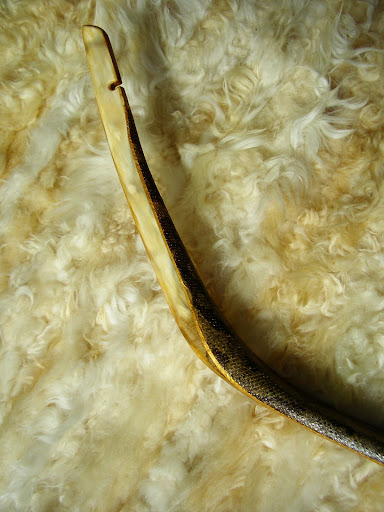
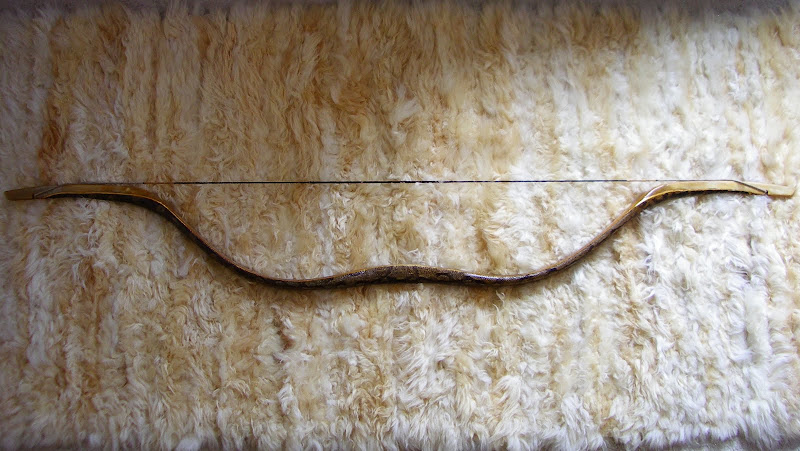
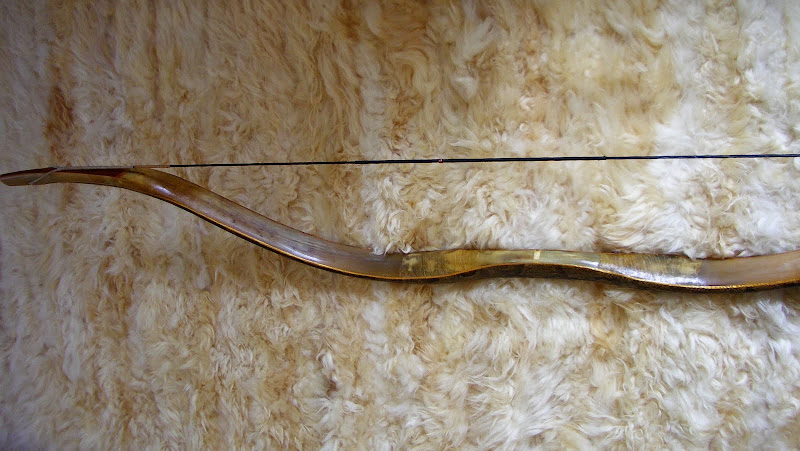
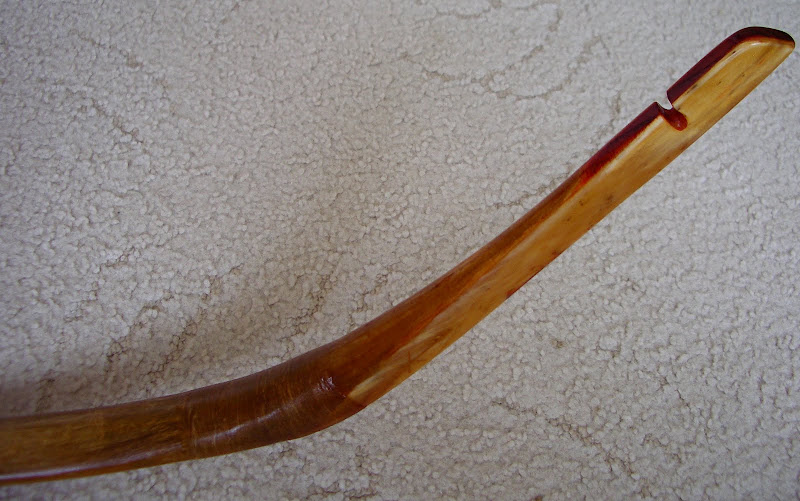
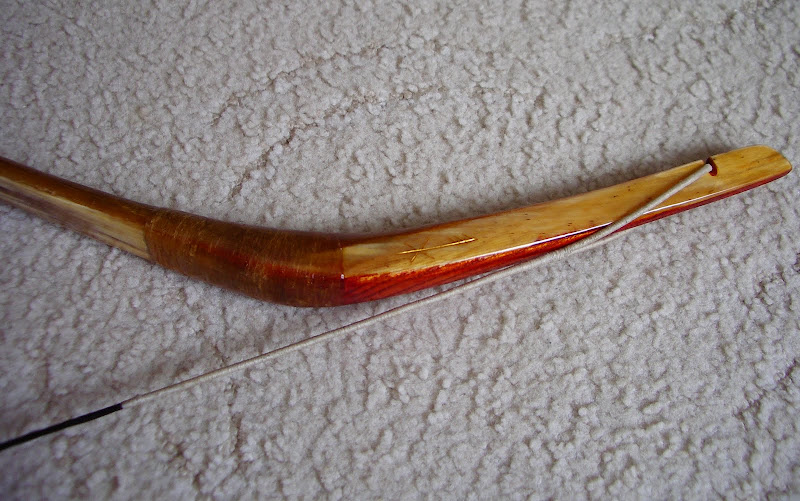
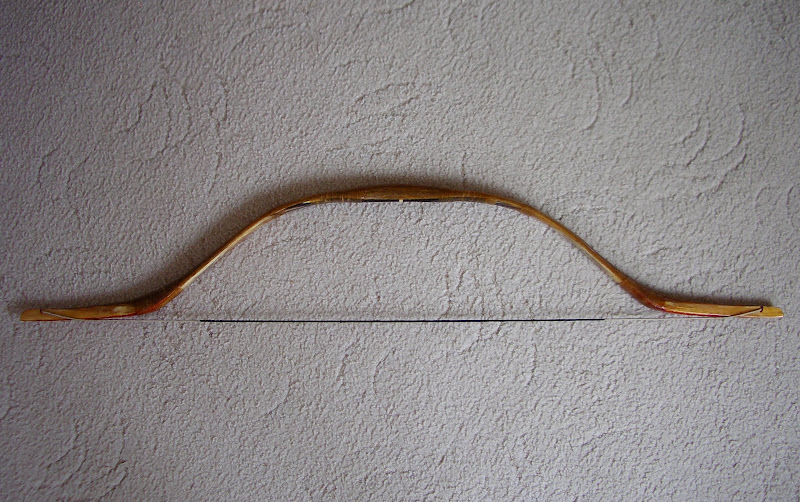
Peter
However, I accepted Paku's advice - as I mentioned before - and my new comers (under seasoning) do have thiner and narrower transitions.
Peter
Last edited by Botondbow on Fri Nov 26, 2010 7:03 am, edited 3 times in total.
Botondbow
-
Adam Karpowicz
- Posts: 753
- Joined: Sun Mar 13, 2005 11:57 am
- Location: Canada
The bows look very well made. I wonder if you could post the dimensions of the bone pieces (or best the range of orig. finds)? The length, the width at the base and at the tip?
How is the length of the siyahs determined in your research? By the bone fragments? I understand all or most wood and horn are gone. How do you know the radius of the siyah/limb bends? I recall some Russian bone finds where the siyah pieces were curved to show the length and the radius.
Adam
How is the length of the siyahs determined in your research? By the bone fragments? I understand all or most wood and horn are gone. How do you know the radius of the siyah/limb bends? I recall some Russian bone finds where the siyah pieces were curved to show the length and the radius.
Adam
-
Outlaw
- Posts: 79
- Joined: Sat May 15, 2010 6:41 pm
- Location: Belgium
-
Botondbow
- Posts: 78
- Joined: Sat Oct 16, 2010 5:18 pm
- Location: Hungary
- Contact:
I'm sure that Paku will answer all your questions; I have only a remark that more than 500 bone plates were (syash and grip) found that?s why I wrote previously average proportions of them!Adam Karpowicz wrote:The bows look very well made. I wonder if you could post the dimensions of the bone pieces (or best the range of orig. finds)? The length, the width at the base and at the tip?
How is the length of the siyahs determined in your research? By the bone fragments? I understand all or most wood and horn are gone. How do you know the radius of the siyah/limb bends? I recall some Russian bone finds where the siyah pieces were curved to show the length and the radius.
Adam
Botondbow
-
paku
- Posts: 55
- Joined: Wed Mar 16, 2005 2:48 pm
- Location: Budapest, Hungary
The bone plates show wide variety at the base (1,8-2,8 cm). At the tip 1,3-1,5 cm. However it is not known how wide the wood was under the bone. The length is 20-25 cm, which is the length of the siyahs as the bone plates cover the whole length of the ears. The angle of the ears is 40 degree. This seems to much to me as on my bows an angle more than 30 needs string bridges. (This is strange as the MB bow has also high angles.) This can be corrected somewhat by increasing the grip set back or by pushing the bending section toward the ear. We can not determine the curvature of the transition zone but some bone plates suggest that it could be sharp (no curvature at all).
The posted bows are 140 in length (90 cm grip + arms), 25 cm rigid section, the string nocks are at 20 cm. (may be a bit to much). The base is 2x2cm. However according to the used V splice the cross section is not rectangular closer to a triangle. I believe that on old Hungarian bows it was rectangular.
S?ndor